

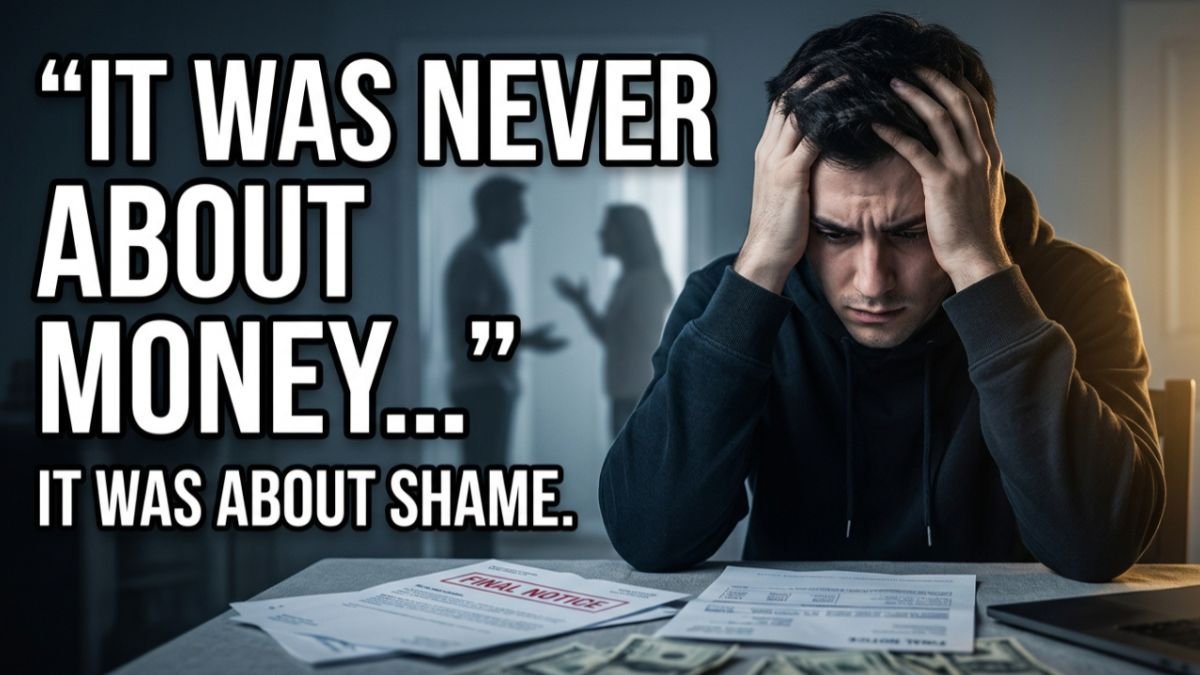
I grew up in a house where money was never silence about in full voice. It lived in hushed conversations behind closed doors, in glances exchanged across the dinner table, in the careful folding of bills and the quiet counting of coins. There were no lessons about budgeting, no open discussions about income or expenses. Instead, there was a strange, unspoken agreement that money was something to be handled discreetly, almost invisibly.
As a child, I didn’t question it. I assumed that this was simply how families operated—that money was private, delicate, and perhaps even dangerous if talked about too openly. But even then, I could sense that the silence carried weight. It wasn’t just about being careful. It felt heavier than that, like a secret no one wanted to admit existed.
Learning Without Being Taught
Because money was never explained, I learned about it indirectly. I learned from tension in voices when bills arrived, from the way my parents avoided certain purchases, from the quiet relief that followed moments of financial ease. I learned that spending required justification, and that wanting something often came with guilt attached.
But what I didn’t learn was perhaps more important. I didn’t learn that money is a tool, something neutral that can be managed and understood. Instead, I absorbed the idea that money was tied to something deeper—something emotional and fragile. Without realizing it, I began to associate financial matters with discomfort, anxiety, and a subtle sense of wrongness.
Carrying the Invisible Burden
By the time I reached adulthood, I thought I had left those patterns behind. I earned my own money, made my own decisions, and believed I was independent of the quiet habits of my childhood. But the truth revealed itself in subtle ways.
I hesitated to talk about salary, even in safe conversations. I felt uneasy discussing financial goals, as though naming them would somehow expose me. I avoided checking my accounts too closely, and when I did, it often came with a wave of unease that I couldn’t quite explain.
It took me years to realize that I hadn’t just inherited my family’s approach to money—I had inherited their silence. And with it came something else, something far less visible but far more powerful.
Understanding the Difference
It wasn’t until my thirties that I began to untangle what I had been carrying for so long. The turning point wasn’t dramatic. It came slowly, through conversations, self-reflection, and moments of clarity that arrived when I least expected them.
I started to see that the secrecy around money in my childhood wasn’t really about money at all. It was about shame. The kind of shame that makes people lower their voices, avoid eye contact, and pretend that everything is under control even when it isn’t.
Money had simply been the stage where that shame played out. It was the visible surface of something much deeper—fear of judgment, fear of not having enough, fear of being seen as inadequate.
And by the time I understood that these were separate things, I realized I had been carrying both.
Breaking the Pattern
Recognizing the difference between money and shame was not an instant solution, but it was a beginning. It allowed me to question the beliefs I had accepted without realizing it.
I began to speak more openly about finances, even when it felt uncomfortable. I allowed myself to ask questions, to learn, to admit what I didn’t know. Slowly, I started to replace silence with understanding.
It wasn’t easy. There were moments when old habits resurfaced, when the instinct to hide or avoid took over. But each time I chose openness, even in small ways, it felt like loosening a knot that had been tied for years.
Redefining My Relationship with Money
Over time, money began to lose its emotional charge. It became less of a source of anxiety and more of a practical part of life. I started to see it as something that could be managed, planned, and even talked about without fear.
More importantly, I began to separate it from my sense of self. Financial situations no longer felt like reflections of my worth. They were simply circumstances—changeable, understandable, and not something to be hidden.
This shift didn’t erase the past, but it changed how I carried it. The silence that once defined my relationship with money no longer held the same power.
Conclusion
Growing up in a house where money was whispered about left a lasting imprint on me, one I didn’t fully understand until much later in life. What I thought was secrecy about finances turned out to be something deeper—a quiet inheritance of shame that shaped how I saw money and myself.
But understanding that difference gave me the power to change it. By learning to speak openly, to question old beliefs, and to separate money from emotion, I began to rewrite a story that had been passed down without words.
In the end, the journey wasn’t just about money. It was about finding a voice where there had only been silence, and realizing that some of the heaviest things we carry are not what we were given, but what we were never taught to let go of.
FAQs
Q1. What is money shame?
Money shame is the feeling of guilt, embarrassment, or unworthiness related to finances.
Q2. How does childhood affect money mindset?
Early experiences shape beliefs about spending, saving, and self-worth linked to money.
Q3. Can money trauma be healed?
Yes, through awareness, mindset shifts, and sometimes professional guidance.

















Leave a Reply