

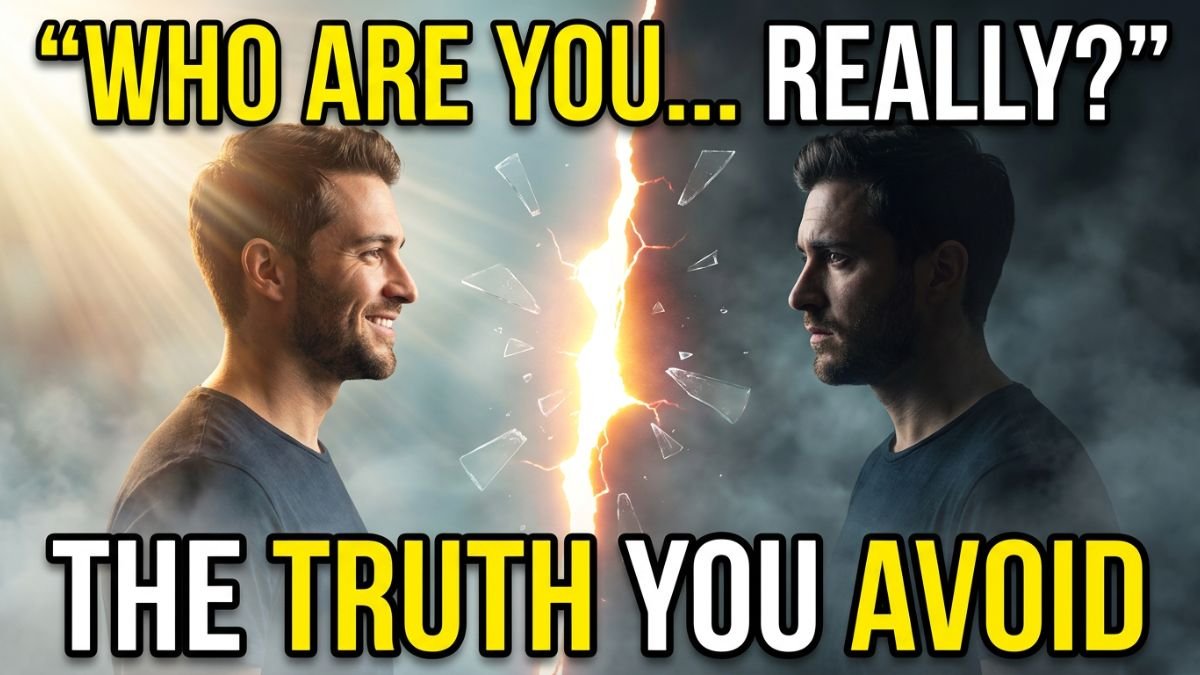
There is a quiet, almost invisible truth about human identity that most people never stop to consider. The version of you that lives inside your own mind is not the same version that lives in someone else’s memory. In fact, these two versions can be so different that if they were somehow brought face to face, they might struggle to recognize each other. This isn’t because one is real and the other is false, but because both are shaped by entirely different lenses—your inner thoughts versus someone else’s lived experience of you.
Inside your own mind, you carry your doubts, insecurities, and unspoken fears. You remember your failures more vividly than your successes. You replay awkward conversations, question your decisions, and often minimize your strengths. But your best friend, for example, doesn’t have access to that inner dialogue. What they see is how you show up in the world—your kindness, your humor, your resilience, and the way you make them feel when they’re around you.
The Gap Between Perception and Reality
This gap between how you see yourself and how others see you is not random. It has a very specific shape. More often than not, that shape is formed by the things you refuse to believe about yourself. If you struggle to see your worth, that disbelief creates a distance between your self-image and the image others hold of you.
Your friend might see you as confident, while you feel like you’re just pretending. They might admire your strength, while you believe you’re barely holding things together. They might see your generosity, while you think you’re just doing the bare minimum. The truth is, people often notice qualities in us that we’ve learned to ignore or dismiss.
This doesn’t mean others are always right and you are always wrong. It simply means that your perspective is incomplete. You are too close to yourself, too aware of your imperfections, to see the full picture clearly.
The Stories We Tell Ourselves
Much of this disconnect comes from the stories we tell ourselves over time. These stories are built from past experiences, failures, and moments where we felt not enough. Slowly, they turn into beliefs. And once something becomes a belief, it starts shaping how we interpret everything about ourselves.
If you believe you’re not good enough, even your achievements will feel like luck. If you believe you’re unworthy, even genuine compliments will feel exaggerated or undeserved. Over time, your internal version of yourself becomes narrower, more critical, and less forgiving.
Meanwhile, the people who care about you are building their own version of you based on what they consistently see. They remember how you helped them when they needed it most, how you made them laugh, how you stayed strong during tough times. Their version of you is often kinder, more generous, and far more complete.
Why This Distance Matters
The distance between these two versions of you isn’t just an interesting idea—it has real consequences. It affects your confidence, your relationships, and the choices you make in life. When you underestimate yourself, you might hold back from opportunities, believing you’re not ready or capable. You might settle for less than you deserve, simply because your inner narrative tells you that’s all you’re worth.
At the same time, this distance can create misunderstandings. When someone appreciates or admires you, you might question their judgment instead of accepting their perspective. You might think, “If they really knew me, they wouldn’t think that way.” But the truth is, they do know you—just from a different angle.
Bridging the Gap
Closing this gap doesn’t mean completely changing how you see yourself overnight. It starts with a simple shift: being open to the possibility that your self-perception might not be the whole truth. Instead of rejecting the positive things others see in you, try to hold space for them.
Listen when someone compliments you. Reflect on the moments they appreciate. Ask yourself what it would mean if those things were actually true. This isn’t about arrogance or overconfidence; it’s about balance. It’s about allowing your internal version of yourself to grow and expand, just enough to include the good that others already see.
Over time, you may begin to notice that the gap starts to shrink. The person you think you are and the person others experience become more aligned. And in that alignment, there is a sense of peace—because you’re no longer fighting against parts of yourself that deserve to be acknowledged.
Conclusion
The idea that different versions of you exist in different minds can feel unsettling at first, but it also holds a powerful opportunity. The distance between these versions is not something to fear; it’s something to explore. It reveals the parts of yourself that you’ve been hesitant to accept, the strengths you’ve overlooked, and the worth you’ve quietly questioned.
If you can learn to see yourself even a little bit through the eyes of those who care about you, you may discover a version of yourself that feels unfamiliar—but deeply true. And perhaps, one day, if those two versions of you were to meet, they wouldn’t feel like strangers at all.
FAQs
Q1. Why do people see me differently than I see myself?
Because others observe your actions objectively, while your self-view is shaped by beliefs and insecurities.
Q2. Is it normal to have multiple versions of yourself?
Yes, everyone is perceived differently depending on relationships and perspectives.
Q3. What creates the gap between self-image and reality?
Limiting beliefs, past experiences, and self-doubt often create this gap.















Leave a Reply