

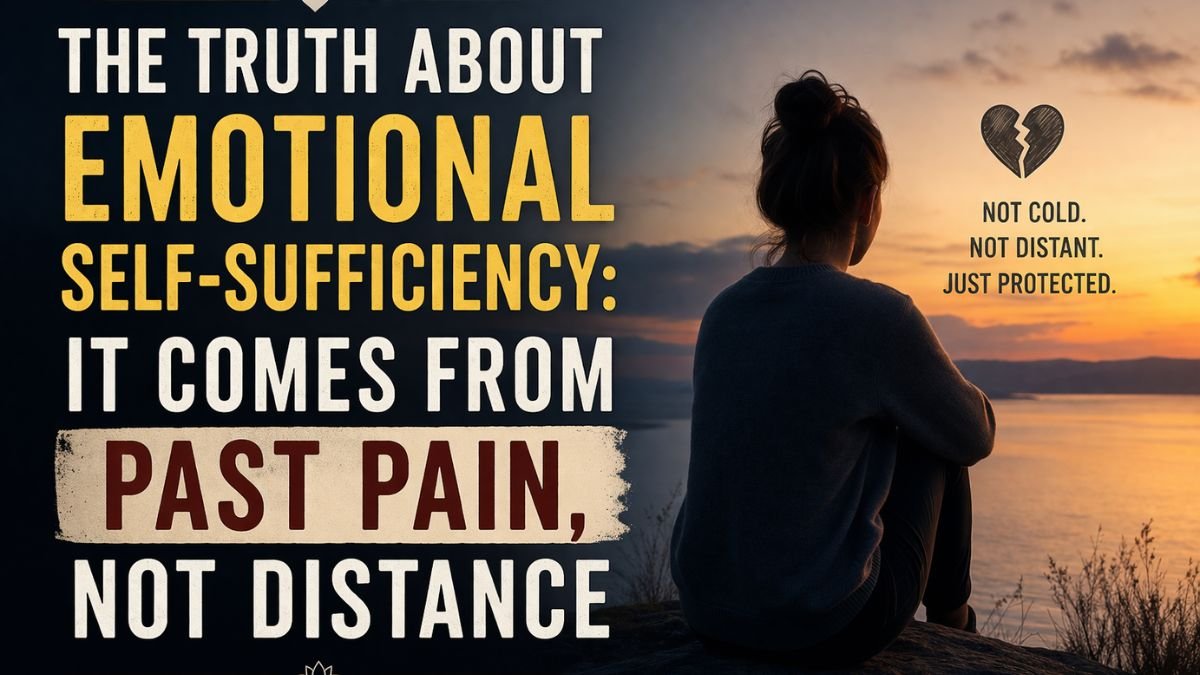
Nowadays, it is quite common for us to come across some people who seem to be highly self-confident, self-assured, and independent from within. These people refrain from showing their feelings, Sufficiency hesitate before putting their faith into someone else, and solve their issues without anyone’s assistance. However, most people consider these people to have a “cold personality,” which is absolutely untrue. Emotional self-reliance is frequently not a matter of choice, but rather a consequence of past experiences. It serves as a form of self-protection—a defense mechanism they have developed to shield their hearts from repeated heartbreak.
What is Emotional Self-Reliance?
Emotional self-reliance implies that an individual does not rely on others to manage their feelings. They process and regulate their own sorrow, joy, and stress independently. Such individuals make their own decisions and, rather than seeking external support, place their trust in their own inner strength.
While this can certainly be a positive attribute, the story hidden beneath the surface is often one filled with pain and disappointment.

Are These People Truly Distant or Cold?
Many people assume that an emotionally self-reliant individual maintains a distance from others or has no need for anyone else. However, this is not entirely accurate.
In reality, these individuals, too, understand the value of relationships and yearn for love and a sense of belonging. The only difference is that, through their experiences, they have learned that placing one’s trust in just anyone is not always safe. Consequently, they construct a “wall” around their hearts to prevent themselves from being hurt again.
Effects of Past Injuries
Many times, past injuries contribute significantly to developing emotional independence. For instance, the injuries can come in the form of betrayal, being rejected, and constant disappointments. When one undergoes consistent emotional pain, they tend to withdraw themselves from other people.
The reasoning behind this is, “If I don’t rely on anybody, nobody will ever hurt me.” This way of thinking instills emotional independence in one but at the same time develops a certain amount of fear of trusting people. Emotional Independence: Its Benefits and Shortcomings
There are several advantages associated with emotional independence. People who are emotionally independent are psychologically strong; they can handle their own affairs in tough situations without bothering others. They take control of their lives and stay dedicated to achieving their aims.But then again, there is a downside to this as well. If one gets used to doing everything by themselves, they will eventually start drifting away from other people. This will make their relationship shallow and lonely in turn.

Is Change Possible?
The best part is that emotional self-reliance is not a permanent state. If a person truly desires it, they can gradually relearn how to place their trust in others.
The most crucial step in this process is self-awareness—understanding oneself—and accepting the fact that not every relationship inevitably leads to pain. With the right people, and by taking time and small, incremental steps, trust can be rebuilt.
Why Is Striking a Balance Essential?
Balance is vital in life. While being self-reliant is commendable, completely cutting oneself off from others is not healthy. Healthy relationships enrich our lives and provide us with emotional support.
Therefore, it is essential that, while maintaining our independence, we also summon the courage to connect with others. It is this very balance that can bring us true happiness and mental peace.
Conclusion
Emotional self-reliance is not a weakness; rather, it is a symbol of the strength one has forged through difficult life experiences. However, it is a misconception to equate it with “distance” or “emotional coldness.”
In reality, it is the story of individuals who have transformed their pain into strength. What they need is understanding, not judgment. Furthermore, if you identify with this profile, remember: you are strong, but you do not have to remain alone forever. With the right people, trust and connection are once again within your reach.
FAQs
Q1. What is emotional self-sufficiency?
A. It’s the ability to manage emotions independently without relying heavily on others.
Q2. Why do people become emotionally self-sufficient?
A. Often due to past hurt, betrayal, or repeated emotional disappointment.
Q3. Are self-sufficient people emotionally distant?
A. Not necessarily—they may appear distant but still value deep connections.
Q4. Is emotional independence healthy?
A. Yes, but it should be balanced with openness to relationships and trust.
Q5. Can emotionally independent people build relationships?
A. Yes, with time and trust, they can form strong and meaningful connections.















Leave a Reply