

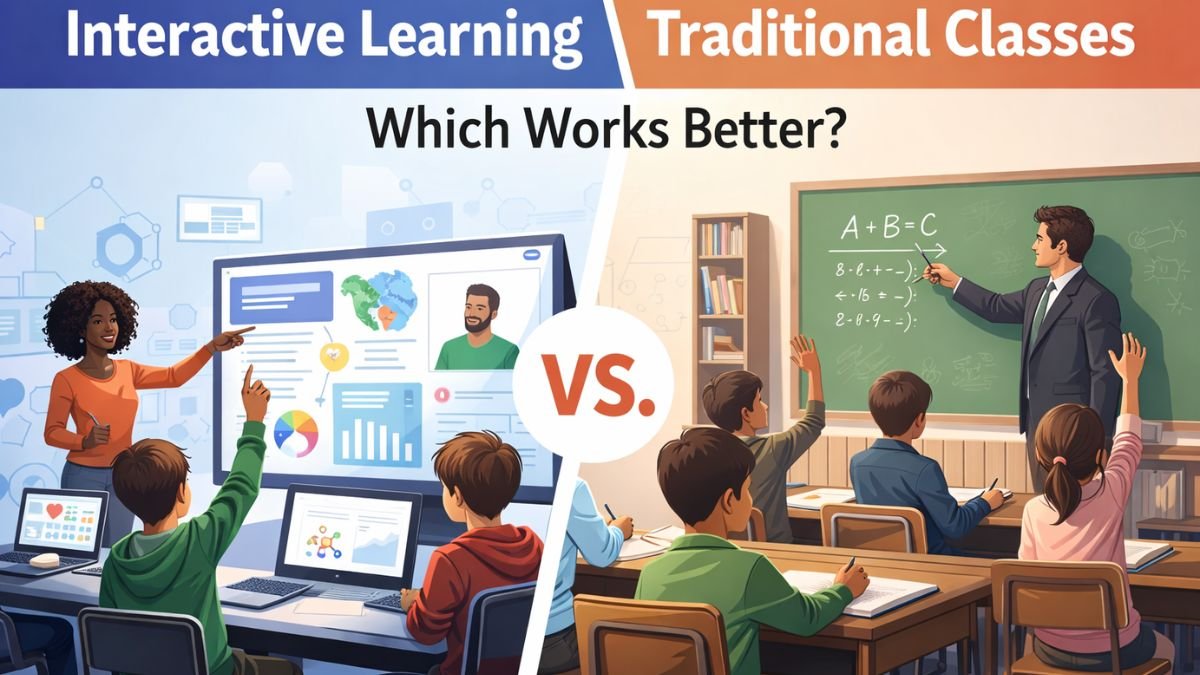
Education has never been a static concept. From ancient classrooms under trees to chalk-filled rooms and now digital screens, the way humans learn has constantly evolved. In recent years, one debate has become especially prominent: interactive learning versus traditional classes. Students, parents, teachers, and institutions all ask the same question—which works better? The answer is not as simple as choosing one over the other. Each approach has its own strengths, challenges, and impact on how learners absorb knowledge, stay motivated, and apply what they learn in real life.
Understanding Traditional Classes
Traditional classes are what most people grew up with. They usually involve a teacher standing at the front of a classroom, delivering lessons while students listen, take notes, and complete assignments. This model has been used for generations because it offers structure, discipline, and consistency. Students follow a fixed timetable, learn from textbooks, and are assessed through exams and written tests. For many learners, this familiarity provides comfort and clarity, especially for those who thrive in organized environments with clear expectations.
Strengths of Traditional Classroom Learning
One of the strongest advantages of traditional classes is face-to-face interaction. Physical presence allows teachers to read body language, notice confusion, and adjust their teaching in real time. Students also benefit from peer interaction, forming friendships and social skills that go beyond academics. Traditional classrooms often encourage discipline, routine, and accountability. For younger learners especially, this structure helps build focus and responsibility. The classroom environment also minimizes distractions compared to digital platforms, making it easier for some students to stay attentive.
Limitations of Traditional Classes
Despite their strengths, traditional classes have limitations. Teaching often follows a one-size-fits-all approach, which can leave some students behind while others feel unchallenged. Passive learning, where students mainly listen rather than participate, can reduce engagement and long-term retention. Additionally, rigid schedules may not suit every learner’s pace or learning style. In today’s fast-changing world, traditional methods can sometimes feel disconnected from real-world problem-solving and creativity.
What Is Interactive Learning?
Interactive learning focuses on active participation rather than passive listening. Instead of simply absorbing information, students engage with content through discussions, activities, simulations, group projects, and digital tools. Learning becomes a two-way process where students ask questions, collaborate, and apply concepts in practical ways. This approach can take place both online and offline, making it flexible and adaptable. Interactive learning emphasizes understanding over memorization and encourages curiosity-driven exploration.
Why Interactive Learning Feels More Engaging
One reason interactive learning has gained popularity is its ability to hold attention. When students actively participate, they are more emotionally and mentally involved. Asking questions, solving problems, and working in teams makes learning feel meaningful rather than mechanical. Interactive environments also allow immediate feedback, helping students correct mistakes and deepen understanding quickly. This sense of involvement often boosts motivation, making learners feel more connected to the subject matter.
Personalization and Learning Pace
Interactive learning often adapts better to individual needs. Learners can move at their own pace, revisit difficult topics, or explore advanced concepts without waiting for the rest of the class. This flexibility is especially helpful for diverse classrooms where students have different strengths and learning speeds. Traditional classes, by contrast, usually follow a fixed curriculum timeline, which can limit personalization. Interactive methods allow learners to take more control of their education, fostering independence and confidence.
Skill Development Beyond Academics
Another major advantage of interactive learning is skill development. Collaboration, communication, critical thinking, and creativity are naturally integrated into interactive environments. Students learn how to express ideas, solve problems, and work with others—skills essential for real-world success. Traditional classes do develop discipline and theoretical knowledge, but they may not always provide enough opportunities to practice these soft skills. Interactive learning bridges this gap by connecting knowledge with action.
The Role of Teachers in Both Models
In traditional classes, teachers are often the primary source of knowledge. Their role is to explain concepts, manage classrooms, and evaluate performance. In interactive learning, the teacher becomes more of a facilitator or guide. Instead of delivering information, they support exploration, encourage discussion, and help students think critically. Both roles are valuable, but they require different skills. Effective educators often blend these approaches, knowing when to instruct and when to step back.
Technology’s Influence on Learning
Technology has played a significant role in the rise of interactive learning. Digital platforms, multimedia resources, and online collaboration tools have transformed how information is accessed and shared. Students can now learn through videos, virtual labs, and interactive simulations that make abstract concepts easier to understand. Traditional classrooms can also benefit from technology, but interactive learning tends to integrate it more deeply, creating dynamic and immersive experiences.
Challenges of Interactive Learning
While interactive learning offers many benefits, it is not without challenges. It requires strong self-discipline, especially in online settings where distractions are everywhere. Not all students feel comfortable participating actively, particularly introverted learners who may prefer quiet reflection. Additionally, interactive methods depend heavily on well-designed content and skilled facilitation. Without proper guidance, sessions can lose focus or depth. Access to technology and reliable internet can also be a barrier for some learners.
Comparing Learning Outcomes
When comparing outcomes, research and experience suggest that interactive learning often leads to better understanding and retention. Active engagement helps the brain process and store information more effectively. Traditional classes, however, can be highly effective for building foundational knowledge and preparing students for standardized assessments. The effectiveness of either method depends on the subject, learner preferences, and quality of instruction. Neither approach is universally superior in every situation.
Blended Learning: The Best of Both Worlds
Many educators now believe the future lies in blended learning, which combines interactive methods with traditional structure. This approach offers the discipline of classroom learning along with the engagement of interactive techniques. Students benefit from face-to-face guidance while also enjoying flexibility and hands-on experiences. Blended learning acknowledges that education is not about choosing sides but about using the right tools at the right time.
Which Works Better for Different Learners?
Different learners respond differently to teaching methods. Students who value routine and direct instruction may thrive in traditional classes. Those who enjoy exploration, collaboration, and flexibility may prefer interactive learning. Age, personality, subject matter, and learning goals all influence what works best. Understanding these differences helps educators and learners make informed choices rather than assuming one method fits all.
Preparing for the Future
The modern world demands adaptability, problem-solving, and continuous learning. Interactive learning aligns closely with these needs, preparing students for real-life challenges. Traditional education, however, provides essential foundations and discipline that should not be overlooked. The most effective education systems recognize the value of both and evolve accordingly.
Final Thoughts on Choosing the Right Approach
So, which works better—interactive learning or traditional classes? The answer depends on context. Interactive learning excels in engagement, personalization, and skill development, while traditional classes offer structure, social interaction, and foundational knowledge. Instead of viewing them as rivals, it is more productive to see them as complementary. When combined thoughtfully, they create a learning experience that is both effective and human-centered. Education works best when it adapts to learners, not when learners are forced to adapt to a single method.











Leave a Reply