

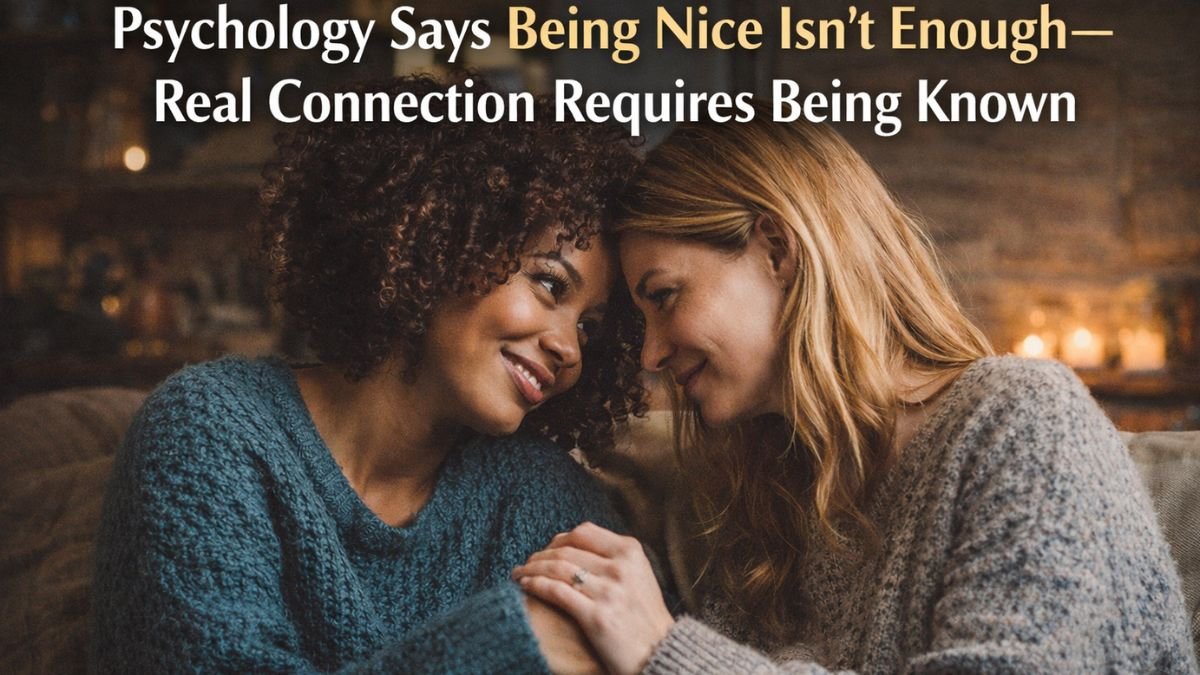
In today’s fast-paced and socially connected world, being “nice” is often seen as the golden rule for building relationships. From childhood, we are taught to be polite, agreeable, and accommodating. We smile, we say the right things, and we try to avoid conflict at all costs. On the surface, this seems like the perfect formula for creating harmony and connection.
But psychology tells a different story. While kindness is important, it is not enough to create deep, meaningful relationships. In fact, relying solely on niceness can sometimes lead to shallow interactions, emotional distance, and even internal frustration. Many people find themselves surrounded by others, yet still feeling unseen, misunderstood, and disconnected.
The truth is simple but powerful: real connection does not come from being liked—it comes from being known.
Why Being Nice Can Feel Empty
Niceness often focuses on maintaining comfort rather than creating authenticity. When we prioritize being nice, we may hide our true thoughts, suppress our emotions, and avoid expressing our real selves. We agree when we actually disagree. We stay silent when we want to speak. We adjust ourselves to fit into what we think others expect.
Over time, this creates a gap between who we are and how we present ourselves to the world. Others may see us as pleasant and easy to be around, but they don’t truly know us. And when people don’t know us, they cannot fully connect with us.
This is why many “nice” people feel emotionally exhausted. They are constantly performing a version of themselves that is acceptable, but not authentic. The result is a sense of loneliness that persists even in the presence of others.
The Psychology of Being Known
To be known means to be seen in your full reality—your strengths, your flaws, your fears, your desires, and your truths. It requires honesty, vulnerability, and emotional openness. Unlike niceness, which often avoids discomfort, being known embraces it.
Psychologists emphasize that deep human connection is built on authenticity. When we allow others to see who we truly are, we create space for genuine understanding. This doesn’t mean sharing everything with everyone, but it does mean choosing to show up as your real self in meaningful relationships.
Being known also involves mutual exchange. It’s not just about revealing yourself; it’s about creating an environment where others feel safe to do the same. This mutual vulnerability is what transforms ordinary interactions into deep, lasting connections.
Vulnerability: The Bridge to Real Connection
One of the biggest barriers to being known is fear. Fear of judgment, rejection, or misunderstanding often keeps us locked behind a mask of politeness. We worry that if people see our imperfections, they might not accept us.
However, vulnerability is not weakness—it is the foundation of emotional intimacy. When we take the risk to be open about our thoughts and feelings, we invite others into our inner world. This openness signals trust and encourages others to lower their own defenses.
Research in psychology consistently shows that vulnerability strengthens relationships. It creates emotional depth, builds trust, and fosters empathy. When someone shares something real with us, we feel closer to them—not because they are perfect, but because they are human.
The Difference Between Being Liked and Being Understood
There is a subtle but important difference between being liked and being understood. Being liked often comes from pleasing others, fitting in, and avoiding conflict. It feels good in the moment, but it doesn’t necessarily lead to deep connection.
Being understood, on the other hand, requires honesty and authenticity. It means allowing others to see your true opinions, even when they differ. It means expressing your emotions, even when they are messy or uncomfortable.
While being liked can bring social acceptance, being understood brings emotional fulfillment. It creates a sense of belonging that goes beyond surface-level interactions. It tells us that we are not alone—that someone truly sees us for who we are.
The Cost of Hiding Your True Self
When we constantly prioritize niceness over authenticity, we pay a hidden emotional cost. Suppressing our true selves can lead to stress, resentment, and even a loss of identity. We may start to feel disconnected not only from others but also from ourselves.
This internal conflict can show up in different ways. Some people feel drained after social interactions. Others struggle with expressing their needs or setting boundaries. Over time, this pattern can damage both personal well-being and relationships.
Real connection cannot exist where authenticity is absent. If people only know a filtered version of you, the connection will always remain limited. True closeness requires truth, even when that truth feels uncomfortable.
Building Real Connections Through Authenticity
Creating meaningful relationships doesn’t mean abandoning kindness—it means redefining it. True kindness includes honesty, respect, and emotional presence. It allows space for both comfort and truth.
To build real connections, we must start by being honest with ourselves. What do we truly feel? What do we genuinely think? What do we need from others? Once we understand ourselves, we can begin to express those truths in our relationships.
Communication plays a key role in this process. Instead of saying what is expected, we can practice saying what is real. This might involve sharing opinions, expressing emotions, or admitting uncertainties. These moments of honesty create opportunities for deeper understanding.
It’s also important to listen with the same level of openness. Real connection is not one-sided. It requires curiosity, empathy, and a willingness to understand others without judgment.
The Role of Emotional Intelligence
Emotional intelligence is essential in moving beyond surface-level niceness. It involves recognizing and understanding our own emotions, as well as being aware of the emotions of others. This awareness allows us to respond thoughtfully rather than react automatically.
People with high emotional intelligence are better able to navigate difficult conversations, express themselves clearly, and build trust in relationships. They understand that conflict is not something to avoid, but something to manage constructively.
By developing emotional intelligence, we can create relationships that are not only kind but also real. We learn to balance honesty with empathy, and authenticity with respect.
Why Real Connection Matters More Than Ever
In a world dominated by social media and digital communication, it has become easier than ever to appear connected while feeling deeply alone. Online interactions often emphasize curated versions of ourselves, where everything looks perfect but lacks depth.
This makes real, authentic connection even more valuable. It provides a sense of grounding and belonging that cannot be replicated through superficial interactions. It reminds us that we are seen, heard, and valued for who we truly are.
Real connection also has a profound impact on mental health. It reduces feelings of loneliness, increases emotional resilience, and enhances overall well-being. Humans are inherently social beings, and our need for genuine connection is deeply rooted in our psychology.
Embracing the Courage to Be Known
Choosing to be known requires courage. It means stepping out of the safety of niceness and into the vulnerability of authenticity. It means accepting that not everyone will understand or agree with you—and that’s okay.
The goal is not to be liked by everyone, but to be deeply connected with the right people. When you allow yourself to be real, you naturally attract those who appreciate and accept you as you are.
This shift can transform your relationships. Conversations become more meaningful. Connections become stronger. And most importantly, you begin to feel a sense of alignment between who you are and how you show up in the world.
Conclusion: From Niceness to Authentic Connection
Being nice is not a bad thing—it is simply incomplete. While kindness creates a foundation for positive interactions, it is authenticity that builds true connection. Without being known, relationships remain on the surface, lacking depth and emotional resonance.
Psychology reminds us that real connection requires more than politeness. It requires honesty, vulnerability, and the willingness to be seen. It asks us to move beyond the fear of judgment and embrace the power of being real.
In the end, the most meaningful relationships are not the ones where we are simply liked, but the ones where we are truly understood. And that understanding begins the moment we choose to show up as our authentic selves.
FAQs
Q1. Why isn’t being nice enough for real connection?
Because niceness often hides true feelings, while real connection requires honesty and authenticity.
Q2. What does it mean to be “known” in a relationship?
It means being understood for who you truly are, including your thoughts, emotions, and imperfections.


















Leave a Reply