

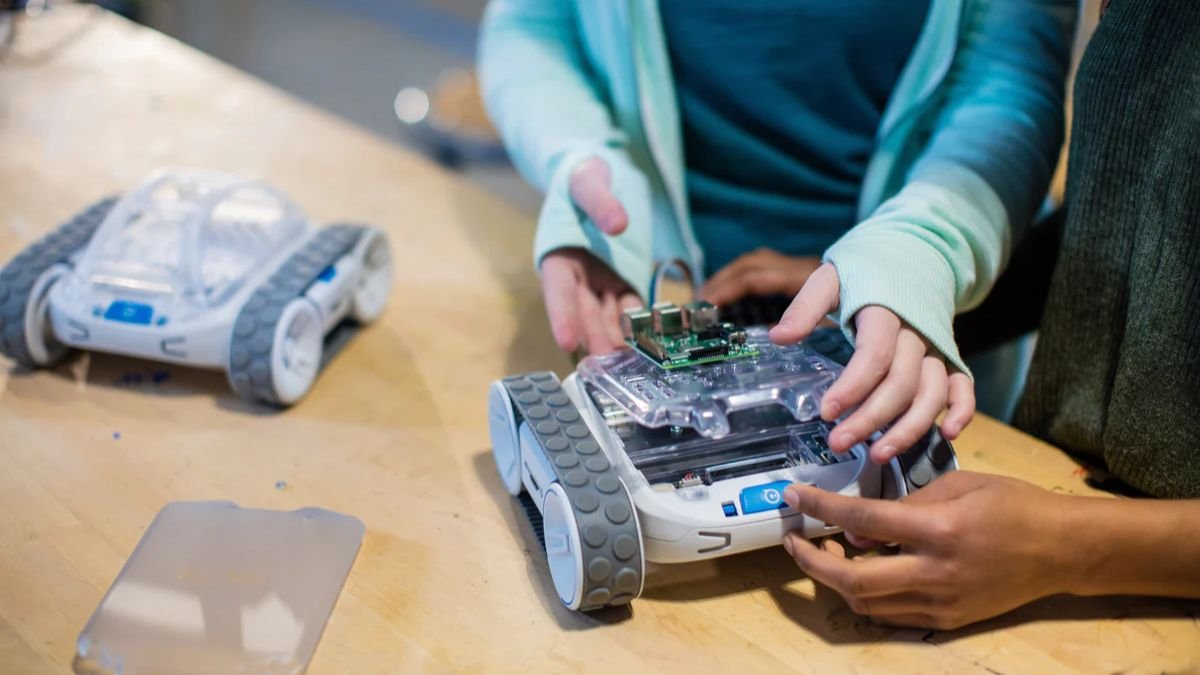
Robotics stands as the most thrilling technology which experiences the fastest progress in current times. People can now build their first robots at home using educational kits and microcontrollers because robots used to exist only in big factories and scientific research facilities. The guide provides information for people who want to explore robots but lack knowledge about starting their learning path. The section will introduce robotics through straightforward explanations which describe its essential elements and requirements for constructing your first robot.
What is robotics and why learn it?
Robotics combines scientific knowledge with engineering principles and programming skills. The field develops machines which accomplish work through automated processes that mirror human abilities. Robotics education improves technical skills while students acquire problem-solving skills and creative abilities and logical reasoning capabilities.
Today, robotics is being used in many fields, including industry, medicine, space exploration, agriculture, and education. If you’re interested in future technologies, robotics can be a great starting point.
Materials Needed for Beginners
You don’t need expensive equipment to build your first robot. The following are sufficient for building a simple line-following or obstacle-avoiding robot:
- Microcontroller board (e.g., Arduino)
- Motor driver module
- Two DC motors and wheels
- Chassis (robot frame)
- Sensors (e.g., ultrasonic sensors)
Batteries and connecting wires
You can buy all these products through online stores and through electronic retail outlets. The most effective approach for beginners is to acquire a fundamental kit which provides them with all essential components.
Step One: Building the Robot’s Body
First, build the robot’s chassis. The chassis is the platform on which the motors, boards, and other components are mounted. Fit the DC motors firmly to both sides of the chassis and attach the wheels.
Next, securely attach the battery holder and microcontroller board. Ensure all components are balanced so the robot can operate properly.
Step Two: Wiring and Connections
Now connect the motor driver module to the microcontroller. Connect the motors to the drivers and the drivers to the board. If you’re building an obstacle-avoidance robot, place the ultrasonic sensor on the front.
Follow the circuit diagram when wiring. Incorrect connections can damage the board or motor, so caution is essential.
Step Three: Programming
The brain of a robot is its program. Connect the microcontroller to a computer via USB and write code in the corresponding software (such as the Arduino IDE).
You can initially write a program to drive the motors back and forth using simple code. If using sensors, write code that allows the robot to detect an object in front and change direction.
There are many free tutorials and examples available on the internet to learn programming. Gradually, with practice, your understanding will become stronger.
Step Four: Testing and Improvement
After uploading the code, turn on the robot and see if it works correctly. If the robot doesn’t move in the expected direction, check both the wiring and the code.
Trial and error is a common process in robotics. Every mistake provides a new learning curve. With patience and practice, you can achieve better results.
Safety and Precautions
- Although beginner robot projects operate on low voltage, some precautions are still necessary:
- Installing batteries correctly and avoiding short circuits.
- Do not touch electronic components with wet hands.
- Keep the power supply off when wiring.
- Adult supervision is essential for children.
Following safety rules will ensure a safe and successful experience.
How to proceed?
Once you’ve successfully built your first robot, the next step may be to move on to more complex projects. You can build a line-follower robot, a Bluetooth-controlled robot, or even a small robotic arm.
In addition, developing a deeper understanding of programming languages and electronics will be beneficial. Participating in robotics competitions is also a great way to hone your skills.
Conclusion
The initial experience of entering robotics work may seem overwhelming at first but proper training together with time dedication will turn it into an exciting journey. The process of constructing a basic robot enables you to acquire technical abilities while also enhancing your creative thought processes and boosting your self-assurance.
If you start today, you could be able to build complex and advanced robotic systems in the future. Remember, every expert was once a beginner—the only difference is that they had the courage to start.









Leave a Reply